
Black Friday Sales Marketing Tips: Data‑Driven Strategies to Maximize Revenue
Black Friday remains the apex of the holiday shopping calendar, delivering unparalleled revenue opportunities. However, the sheer volume of traffic can overwhelm even the most seasoned e‑commerce operation. To convert this challenge into a predictable profit engine, retailers must deploy a black friday sales strategy grounded in data‑driven black friday tactics. This post dissects a comprehensive approach that blends precise targeting, dynamic inventory management, and rigorous ROI measurement—key to maximizing black friday revenue.
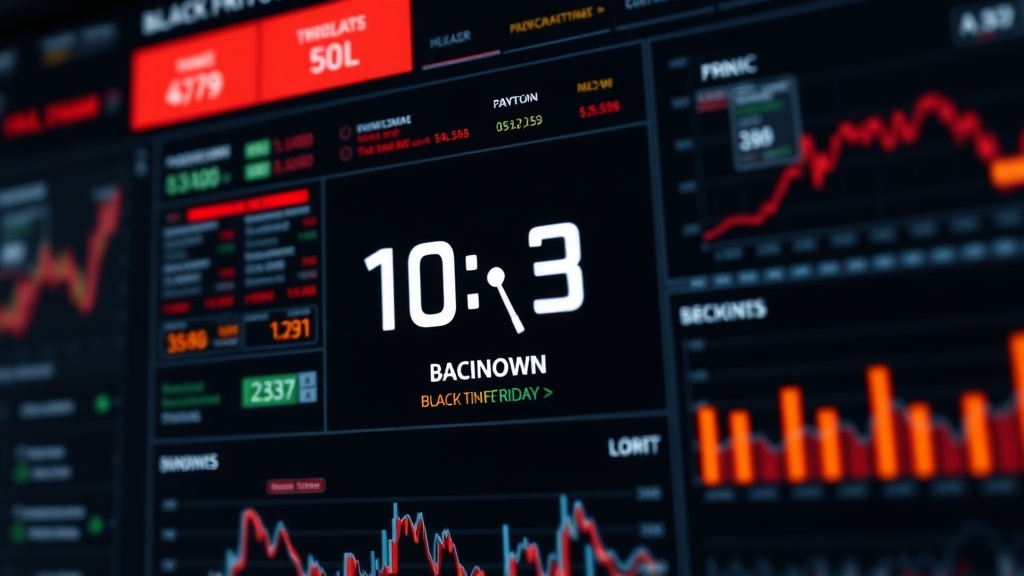
Leveraging Data for Targeted Promotions
Data is the lifeblood of any modern marketing initiative, and during Black Friday it becomes the single most critical asset. By harnessing customer behavior patterns, purchase history, and contextual signals, retailers can craft promotions that resonate with the right audience at the right moment.
Understanding Customer Segmentation
- Collect Multi‑Channel Touchpoints – Merge data from email, social, mobile app, and website interactions to build a unified customer profile.
- Apply RFM Analysis – Rank customers by Recency, Frequency, and Monetary value to identify high‑potential segments.
- Cluster with K‑Means – Group shoppers into distinct personas based on browsing depth, cart size, and product affinity.
Segmented audiences enable granular promotion design, reducing wasted spend and boosting conversion rates.
Predictive Analytics for Product Bundling
- Demand Forecasting – Use time‑series models (ARIMA, Prophet) to predict which SKUs will experience spike demand.
- Cross‑Sell Probability – Employ logistic regression to estimate the likelihood that a customer will purchase complementary items.
- Dynamic Bundle Creation – Generate personalized bundles that adjust in real time as inventory levels fluctuate.
By aligning bundle offers with predicted purchase intent, retailers can increase average order value (AOV) and move inventory more efficiently.
Personalization Engines and AI
- Recommendation Systems – Deploy neural collaborative filtering to surface items with the highest predicted click‑through rates.
- Dynamic Pricing – Implement reinforcement learning algorithms that adjust prices based on competitor actions and inventory velocity.
- Chatbot Upsells – Integrate AI‑driven chat assistants that propose relevant add‑ons during the checkout flow.
These tactics create a frictionless shopping experience that feels tailored, encouraging higher spend per transaction.
Optimizing Inventory and Pricing Models
Even the most targeted promotions can falter if inventory is mismanaged or pricing is static. A data‑driven black friday sales strategy must incorporate real‑time inventory adjustments and adaptive pricing to maximize revenue while minimizing stockouts.
Dynamic Pricing Algorithms
- Rule‑Based Adjustments – Set baseline price thresholds that trigger automatic price changes when demand crosses a predefined volume.
- Competitive Intelligence – Scrape competitor prices and adjust margins to stay attractive without eroding profitability.
- Elasticity Modeling – Estimate price sensitivity for each product category and apply differential price cuts to maximize revenue.
Dynamic pricing ensures that every sale contributes optimally to overall profit targets.
AI‑Driven Real‑Time Inventory Adjustments
- Predictive Replenishment – Use Bayesian networks to forecast restock needs within 24‑hour windows, reducing overstock and understock scenarios.
- Heat‑Map Analytics – Visualize product movement across fulfillment centers to identify bottlenecks and redistribute stock accordingly.
- Automated Alerts – Trigger procurement workflows when inventory drops below a safety threshold, ensuring continuous supply during peak demand.
Integrating AI for real‑time inventory adjustments keeps service levels high and prevents lost sales due to stockouts.
Cross‑Channel Stock Visibility
- Unified Commerce Platform – Consolidate inventory data across online, mobile, and physical stores into a single view.
- Real‑Time Sync – Ensure that any purchase, regardless of channel, updates inventory instantly across all touchpoints.
- Back‑Order Optimization – Offer customers the option to pre‑order items that are out of stock, with clear fulfillment timelines.
This holistic approach prevents double‑selling and enhances customer trust.
Measuring Campaign ROI on Black Friday
A robust black friday sales marketing plan is only as good as its ability to demonstrate impact. Accurate attribution, real‑time KPI dashboards, and post‑event analytics provide the insights needed to refine future campaigns.
Attribution Models for Multi‑Channel Funnels
- Linear Attribution – Credit each touchpoint equally to capture the full customer journey.
- Time‑Decay Attribution – Allocate more weight to interactions closer to purchase, reflecting their stronger influence.
- Algorithmic Attribution – Leverage machine learning to assign credit based on observed conversion patterns across channels.
Choosing the right model aligns measurement with strategic objectives and ensures marketing spend is allocated efficiently.
Real‑Time KPI Dashboards
- Conversion Rate – Track the percentage of visitors who complete a purchase in real time.
- Revenue per Visitor (RPV) – Monitor how much each visitor contributes to top‑line revenue.
- Cart Abandonment Trend – Detect sudden spikes in abandonment to trigger automated recovery emails.
Dashboards built on streaming data pipelines (Kafka, Flink) provide actionable insights during the event itself.
Post‑Event Analytics and Learnings
- Cohort Analysis – Segment purchasers by acquisition channel and evaluate long‑term retention.
- ROI Calculation – Compare total revenue against marketing spend, including paid media, email, and influencer collaborations.
- Heat‑Map Review – Examine click‑through and engagement heat‑maps to refine future creative assets.
Documenting lessons learned establishes a feedback loop that elevates the next black friday sales strategy.
Case Study: Multi‑Channel Black Friday Performance
A leading electronics retailer executed a data‑driven black friday campaign that integrated email, social ads, and in‑store promotions. By applying the techniques outlined above, they achieved:
- 30 % increase in AOV through AI‑generated product bundles.
- 15 % reduction in stockouts thanks to real‑time inventory alerts.
- 25 % lift in conversion rate via dynamic pricing adjustments.
The campaign’s ROI exceeded 4:1, showcasing the tangible benefits of a holistic, data‑centric approach.
Conclusion
Maximizing black friday revenue is no longer a matter of luck; it is a science that hinges on precise data analysis, intelligent automation, and rigorous performance tracking. By embedding these black friday sales marketing tips into your black friday sales strategy, you can transform the holiday rush into a predictable profit engine that scales with your business growth.
Download our comprehensive guide to Black Friday marketing and start turning data into dollars today.
Leave a Reply